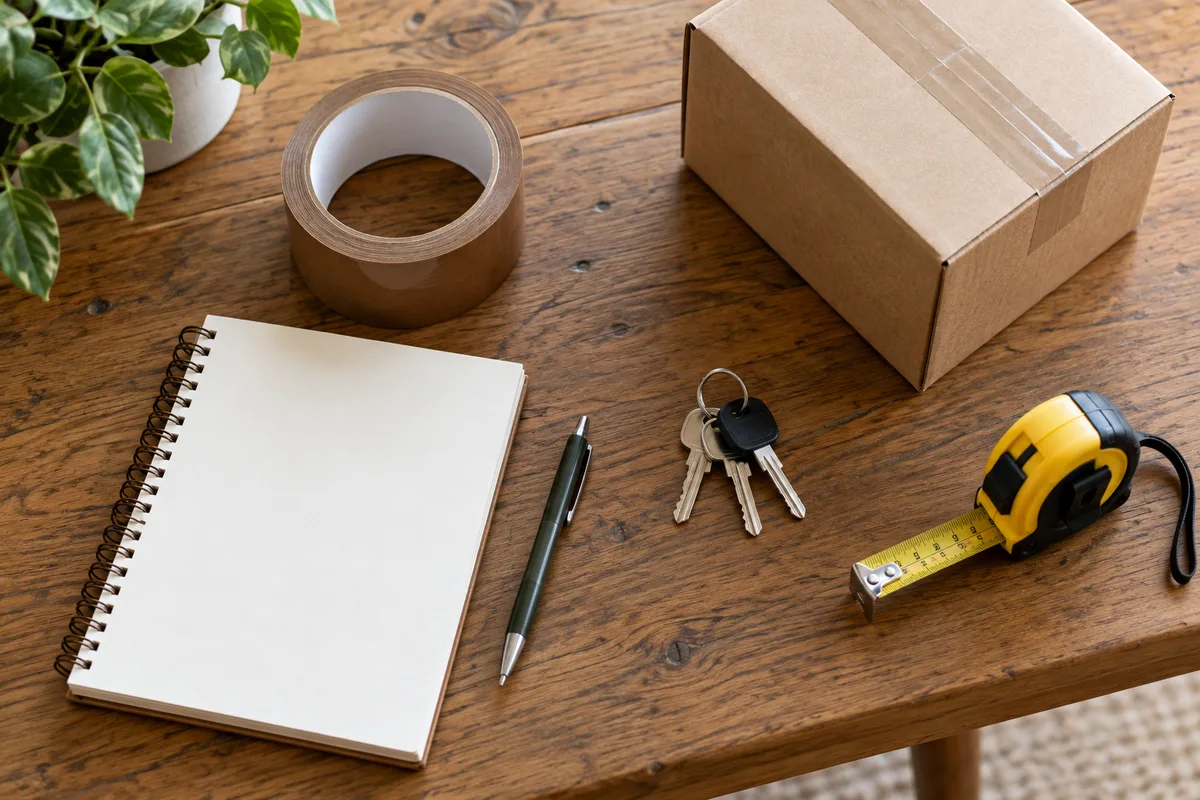
Packing is more useful when it helps you unload and find things later. A sealed box is not an achievement by itself if it is too awkward to move or contains the documents you need that evening. Plan the order, labels and essentials before working through the rooms.
This guide is a practical framework. It is not specialist packing advice for valuable, hazardous or unusually delicate items; ask the relevant provider about those.
Sort before sealing
Identify what you are keeping, what needs another destination and what requires special handling. Do not pack unwanted items simply because a box is available. Make sure any disposal or donation arrangements are appropriate and confirmed rather than leaving them to moving day.
Begin with belongings you will not need before the move. Keep daily-use items accessible for longer. If several people are packing, agree the system so that one person’s labels make sense to everyone.
Pack for manageable handling
Use containers suitable for the contents and avoid assuming that a large box should be filled with the heaviest items. Consider the load, grip and route it will travel. A box can be awkward even if its total weight looks modest.
HSE guidance provides a framework for assessing manual-handling risks. If an item is heavy, unstable or difficult to carry, obtain appropriate help rather than relying on a lifting slogan. Do not test an unsafe load simply to prove you can manage it.
Label by destination
Put the destination room on the box and add a short description where useful. A simple numbering system can help for important boxes, but do not build an elaborate inventory you cannot maintain. Labels should be readable when boxes are stacked.
If contents are delicate, discuss the packing and handling with the provider. A fragile label does not compensate for unsuitable packing, and a label should not imply that a company has agreed to handle an item it has not assessed.
Keep essentials outside the main load
Set aside documents, medicines, chargers, toiletries and the items you need immediately. Think about children, pets and any health needs. Carry those essentials in an arrangement you control and can access easily.
Make a small first-night plan for ordinary tasks: getting into the property, charging a phone, washing and having something to eat. The purpose is to avoid searching through many boxes while tired.
Communicate what remains
If packing is incomplete close to the move, tell the provider honestly. Loose items and last-minute additions may change the agreed job. Ask how they should be prepared rather than assuming they can be added without discussion.
Keep tools or parts associated with dismantled furniture clearly linked to the item, following the provider’s instructions. A loose bag of unidentified fixings can make reassembly harder.
Unpack by need
At the new property, start with essential rooms and the items needed first. Check important boxes against your simple record. Do not empty every container at once if that creates more clutter than you can manage.
A good packing system makes the next stage easier. It is clear enough to use when tired and simple enough that everyone involved can follow it.
A practical example
A household begins filling large boxes with books. They reconsider the load and split the contents into more manageable containers suitable for the move. They label destination rooms and keep an essentials bag separate. At arrival, they can locate bedding and chargers without opening every box, while the provider has a clearer picture of what is ready to move.
Your next steps
- Sort belongings before packing and identify specialist items early.
- Choose suitable containers and keep loads manageable for the route.
- Use readable destination labels and a simple record for important boxes.
- Keep documents, medicines and first-night essentials accessible.
Sources and scope
HSE: Manual handling guidance.
Keep exploring
- Moving house in Glasgow: a practical planning checklist
- Comparing Glasgow removal quotes: scope before headline price
- Moving from a Glasgow flat: stairs, access and parking questions
- Moving address checklist: council, DVLA and everyday accounts
- Moving day essentials: contacts, access and the first night
Keep exploring the practical questions.
Explore the guides